
Academics & Curriculum at Capital International School
CBSE-affiliated curriculum from KG to Grade 10 with STEM integration, smart classroom teaching, activity-based learning, and four languages. Built for depth, not just syllabus completion.
CBSE Academics That Go Beyond Syllabus Completion
Most schools will tell you they follow the CBSE curriculum. That is the baseline, not the differentiator. What matters is how it is taught.
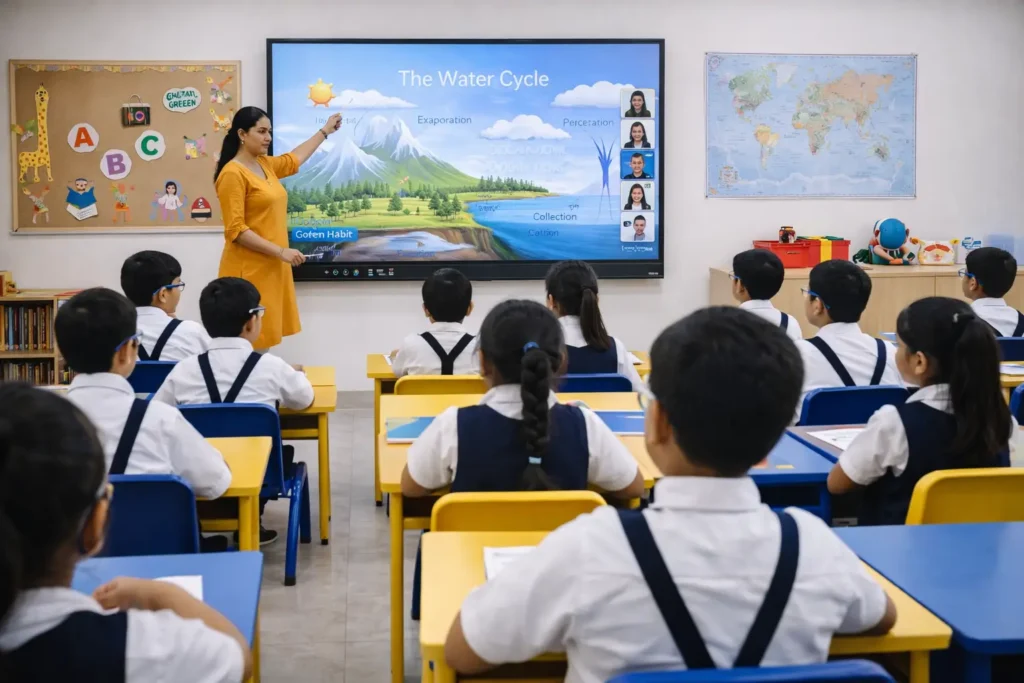
At Capital International School, every classroom uses smart boards and digital tools as the default teaching method, not as a once-a-week novelty. STEM concepts are woven into daily lessons from kindergarten onward. Younger students learn through structured play and activity-based methods that build understanding before they build exam skills. Older students get rigorous board preparation layered with project work, lab experiments, and critical thinking exercises.
The goal is simple: your child should understand what they are learning, not just memorise it. That is the difference between a student who can answer a question paper and a student who can actually think.
Grade Structure
What Your Child’s Academic Journey Looks Like, Grade by Grade
Grades: KG (Nursery, LKG, UKG)
Kindergarten: Where Learning Starts With Curiosity, Not Pressure
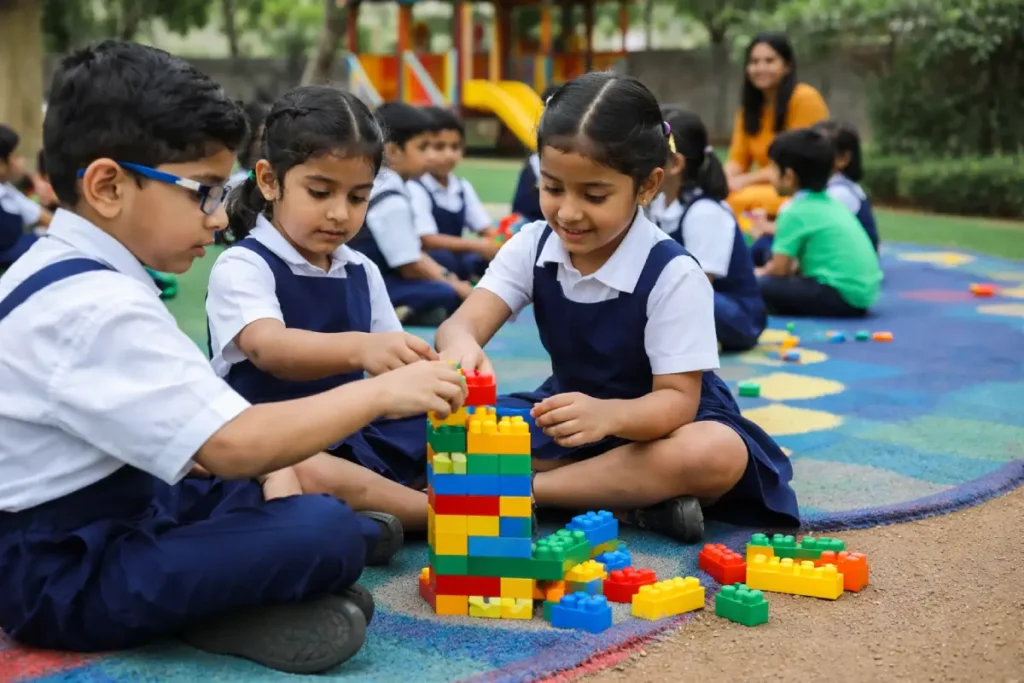
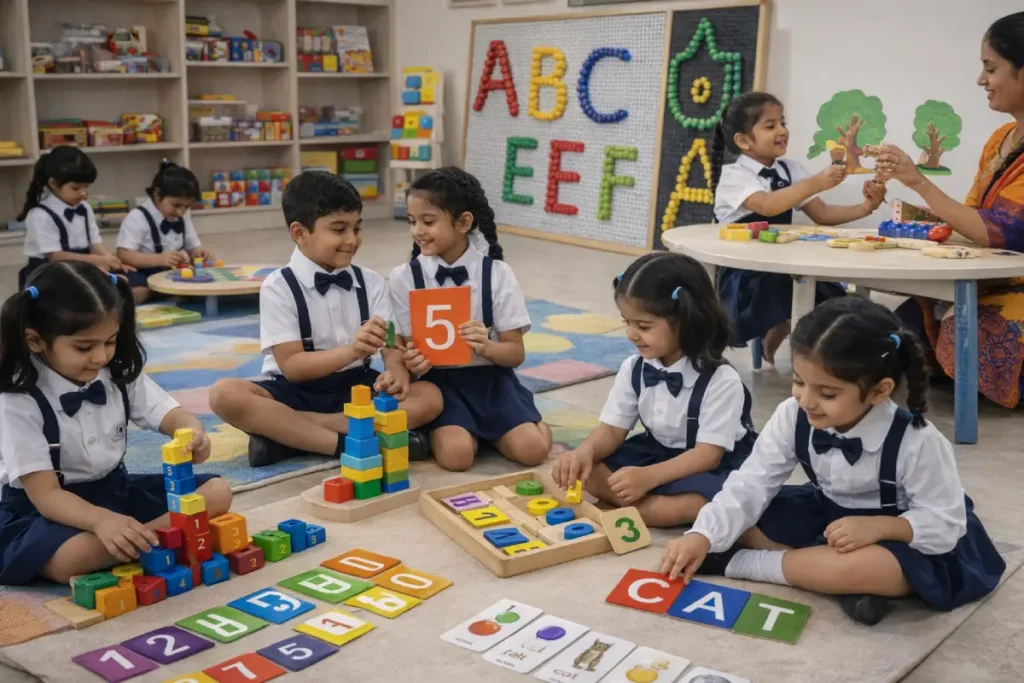
At this stage, children are not sitting at desks copying from blackboards. They are learning through play, stories, songs, art, and hands-on activities. The kindergarten programme at Capital International School builds foundational literacy and numeracy through structured activity-based methods. Children learn to recognise letters and numbers, develop motor skills, build social confidence, and begin understanding the world around them, all in a dedicated early-years space designed for their age group.
Primary School (Grades 1 to 5)
Primary School: Building Strong Foundations That Last
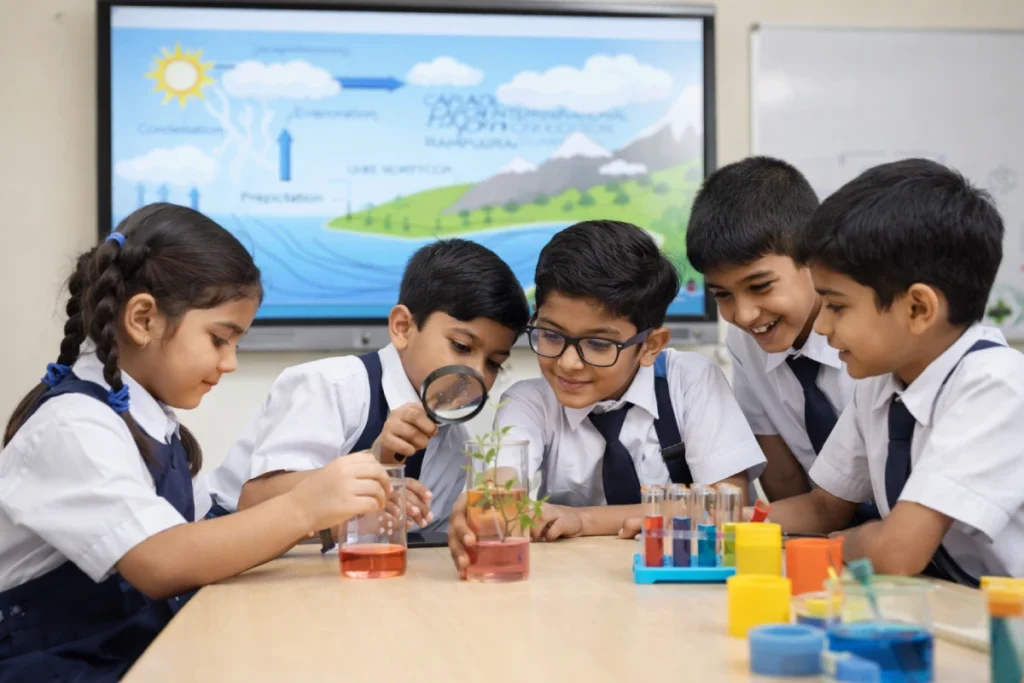
At Capital International School, the curriculum progresses from play-based to structured, hands-on learning, utilizing smart boards for interactive lessons. Science is taught through simple experiments, and Math emphasizes real-world problem-solving. By Grade 5, students are proficient in reading, writing, and numeracy, and have a foundational knowledge
Middle and Secondary School (Grades 6 to 10)
Middle and Secondary School: From Understanding to Application
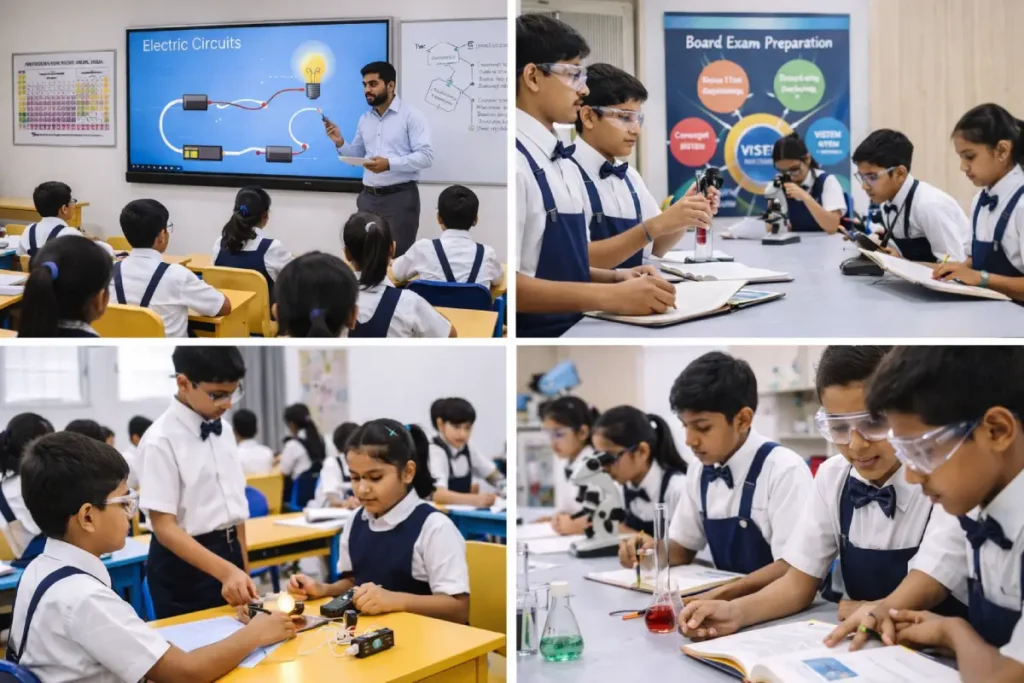
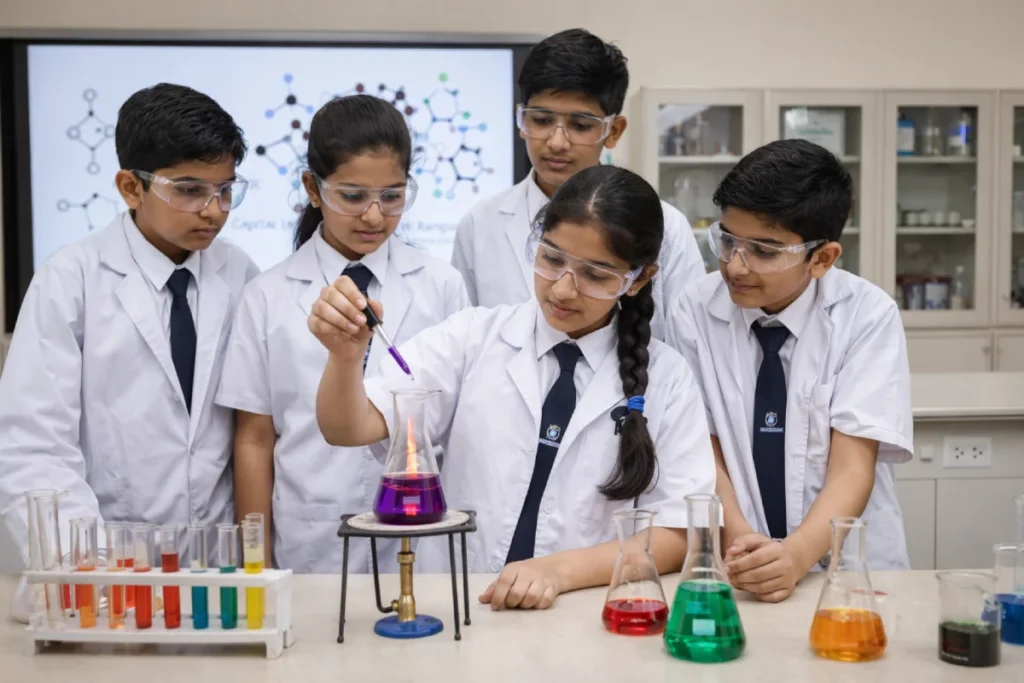
At Capital International School, the academic approach for the full CBSE curriculum, featuring subject-specific teachers, dedicated lab time, and structured exam preparation, prioritizes deep understanding over rote memorisation. Science students actively perform chemical reactions, Mathematics connects formulas to real-world problems, Languages focus on communication, and Social Science is taught through discussions and projects. By Grade 10, students are thoroughly prepared for the CBSE board examinations, equipped with the confidence and critical thinking skills for their future academic paths.
How We Teach
Four Methods That Change How Your Child Experiences School
Smart Board Teaching in Every Classroom
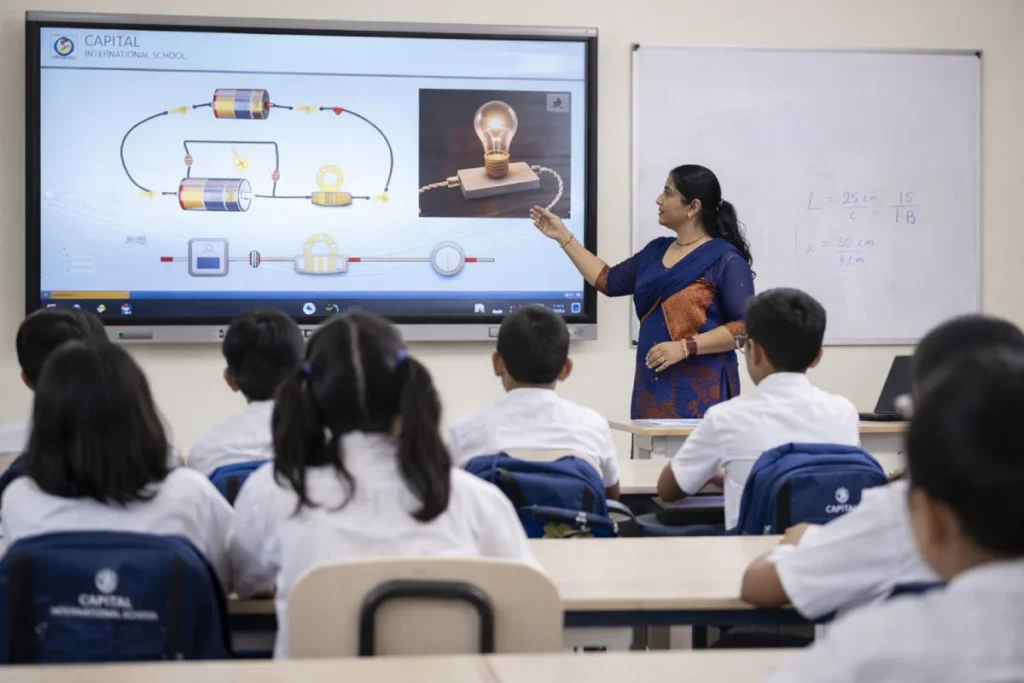
Every classroom at Capital International School is equipped with a smart board. Lessons are visual, interactive, and engaging. Teachers use digital content, videos, and real-time demonstrations to explain concepts that a textbook alone cannot convey. This is not a technology add-on. It is how every subject is taught, every day, in every grade. This integrated approach ensures a deeper understanding.
STEM Integration From Kindergarten Onward
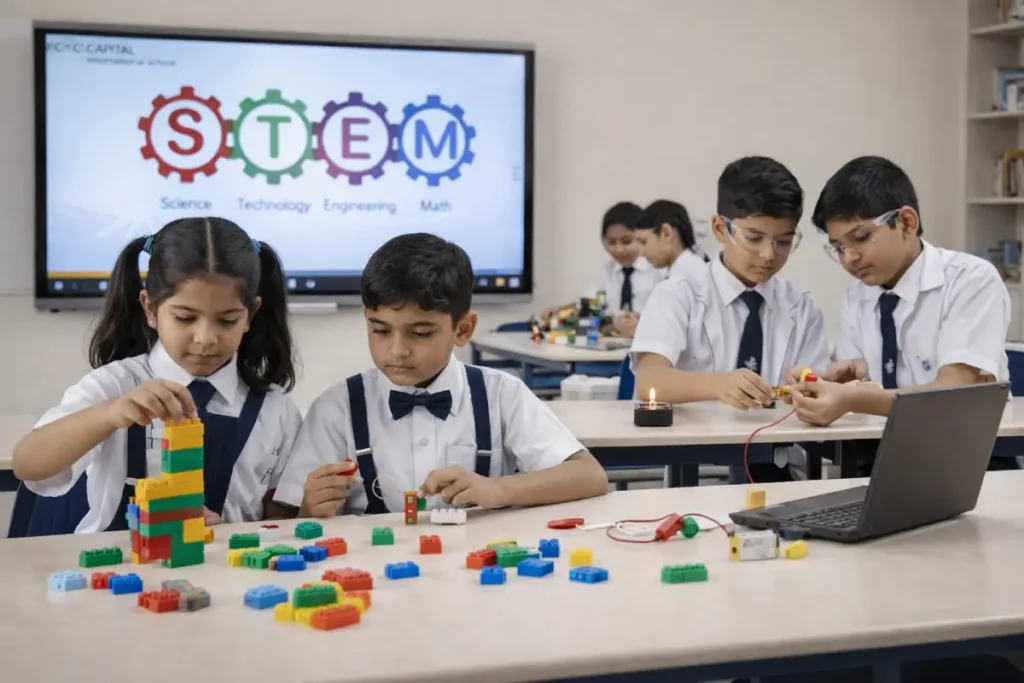
Science, technology, engineering, and mathematics are not treated as isolated subjects. They are integrated into daily lessons starting from KG. Younger students explore STEM through building activities, simple experiments, and pattern recognition. Older students tackle real-world problems using concepts from multiple subjects. The goal is to build a generation of students who can think across disciplines, not just within them.
Activity-Based Learning for KG and Primary
Young children learn best when they are doing, not sitting. The KG and primary programme at Capital International School uses structured activities, hands-on materials, storytelling, art, music, and movement to teach foundational concepts. A child learns numbers by counting real objects. They learn letters by tracing, building, and associating sounds with images. This approach builds genuine understanding that sticks, rather than rote recall that fades.
Regular Assessments With Clear Parent Reporting
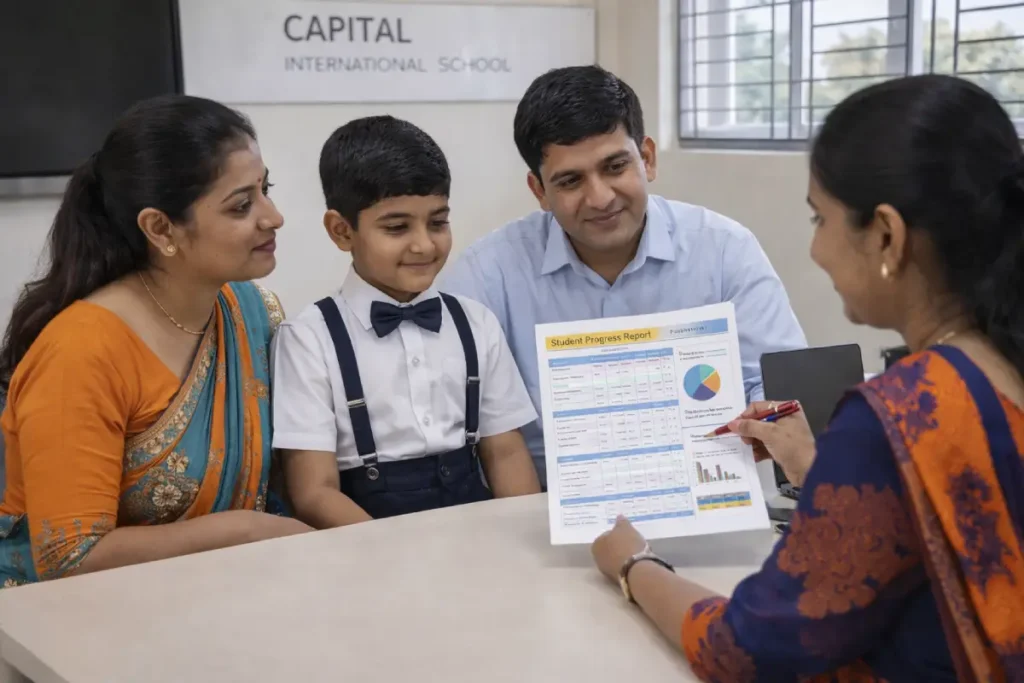
Parents are never left guessing about their child’s progress. The school follows a structured assessment cycle with regular unit tests, formative evaluations, and term examinations. After each assessment cycle, parents receive detailed reports covering academic performance, areas of strength, areas that need attention, and teacher observations. If something needs to change, you will hear about it before it becomes a problem.
Languages Offered
Four Languages. One School.
Language skills open doors. Capital International School teaches four languages as part of the regular curriculum, giving students fluency and confidence across multiple communication systems. English is the medium of instruction. Hindi, Kannada, and Sanskrit are taught as dedicated subjects with structured progression from primary through secondary.
|
Language |
Role |
Grades |
|---|---|---|
|
English |
Medium of instruction |
KG to Grade 10 (all grades) |
|
Hindi |
Second language |
KG to Grade 10 (all grades) |
|
Kannada |
Third language |
KG to Grade 10 (all grades) |
|
Sanskrit |
Additional language |
Grade 3 onward (as per CBSE structure) |
Subjects Offered at Each Stage
A clear breakdown of what your child will study at every level, from kindergarten through Grade 10, following the CBSE curriculum.
|
Stage |
Subjects |
|---|---|
|
Kindergarten (KG) |
Early literacy, early numeracy, environmental awareness, art and craft, music and movement, storytelling, motor skill activities, basic Hindi and Kannada introduction |
|
Primary (Grades 1–5) |
English, Hindi, Mathematics, Environmental Science (EVS), General Knowledge, Computer Science, Art and Craft, Physical Education, Kannada, and Sanskrit (from Grade 3) |
|
Middle (Grades 6–8) |
English, Hindi, Mathematics, Science, Social Science, Computer Science, Sanskrit, Kannada, Art, Physical Education, STEM projects |
|
Secondary (Grades 9–10) |
English, Hindi, Mathematics, Science (Physics, Chemistry, Biology), Social Science (History, Geography, Political Science, Economics), Computer Science, Sanskrit, Kannada, Physical Education, Art |
Board Affiliation
CBSE Affiliated. Confirmed.
Capital International School is affiliated with the Central Board of Secondary Education (CBSE), New Delhi. The curriculum follows CBSE guidelines and examination patterns for all grades from KG to Grade 10. Students appearing for board examinations in Grade 10 will sit for the CBSE board exams conducted nationally.
CBSE affiliation means your child’s education is nationally recognised, transferable across states, and aligned with competitive exam patterns, including JEE, NEET, and other national-level entrance tests.
|
Detail |
Information |
|---|---|
|
Board |
CBSE (Central Board of Secondary Education), New Delhi |
|
Affiliation Status |
Confirmed |
|
Grades Covered |
Kindergarten to Grade 10 |
|
Medium of Instruction |
English |
Academic Year
A Structured Academic Year With Clear Milestones
Every academic year at Capital International School follows a planned calendar with two terms, regular assessment cycles, parent-teacher meetings, co-curricular events, and examination schedules. Parents know what is happening and when. There are no surprises.
|
Period |
What Happens |
|---|---|
|
Term 1 (Apr–Sep) |
Regular classes, first unit tests, formative assessments, mid-term exams, and first parent-teacher meeting |
|
Term 2 (Oct–Mar) |
Second unit tests, project submissions, annual exams, second parent-teacher meeting, annual day, and sports day |
|
Monthly |
Smart board-led classes, lab sessions (Grades 6+), STEM activities, library periods, sports, and swimming |
|
Ongoing |
Regular assessments with detailed parent reports after each evaluation cycle |
Academics at a Glance
|
Detail |
Information |
|---|---|
|
Board Affiliation |
CBSE (Central Board of Secondary Education) confirmed |
|
Grades |
Kindergarten (KG) to Grade 10 |
|
Medium of Instruction |
English |
|
Languages Taught |
English, Hindi, Kannada, Sanskrit |
|
Teaching Method |
Smart board-led instruction, STEM integration, activity-based learning (KG/primary) |
|
Assessment Pattern |
CBSE continuous evaluation with regular unit tests, term exams, and detailed parent reporting |
|
Lab Facilities |
Science laboratory, computer laboratory (both with individual workstations) |
|
Academic Year |
Two terms: April–September and October–March |
Visit Us
The Best Way to Understand Our Academics Is to See a Classroom in Action.
Visit the campus and walk through the classrooms, labs, and learning spaces. Talk to the teachers. See how the smart boards work. Ask about the curriculum for your child’s specific grade. Every question answered on the spot.