
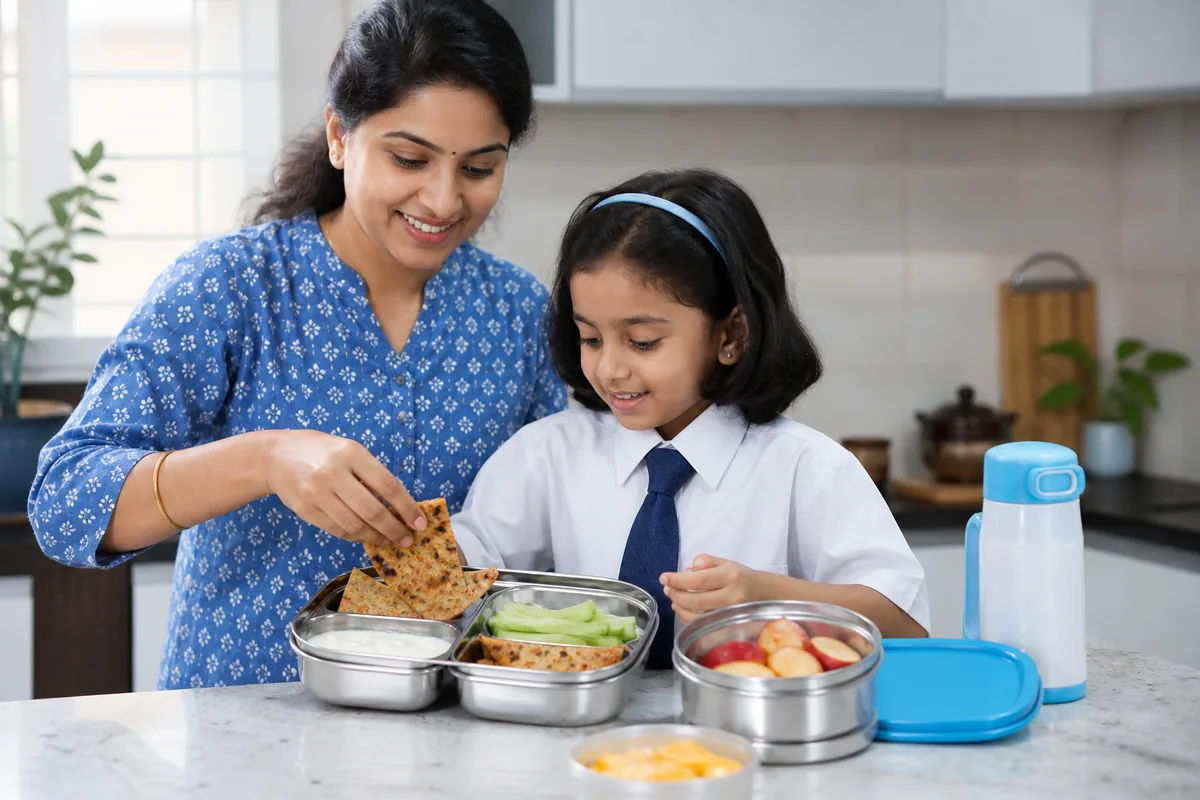
Healthy Lunch Box Ideas for School: Complete Guide
Useful healthy lunch box ideas for school combine four things: a grain or staple, a protein-rich food, vegetables or fruit, and safe drinking water. Keep portions realistic, use familiar Indian foods and test whether the child can open and finish the meal within the break. A simple balanced tiffin is better than an elaborate lunch that returns untouched.
Variety can come across the week rather than in every box. Food safety, allergy rules and the child’s appetite matter as much as presentation.
What makes a lunch box balanced?
A balanced school lunch includes energy, protein and produce in forms the child will eat. Indian combinations already do this well: roti with dal or paneer and vegetables; vegetable rice with curd when kept cold; idli with sambar; or millet dosa with a protein-rich accompaniment.
The ICMR–National Institute of Nutrition dietary guidelines emphasise diverse, minimally processed foods, pulses, vegetables, fruit and appropriate cereals. Use that pattern rather than classifying one fashionable ingredient as a complete meal.
Start with the child’s normal intake. If half a roti and a small katori of dal is typical, packing three rotis creates waste and pressure. Ask the child which item was hard to eat: taste, temperature, texture, time or packaging may be the real problem.
Water should be the default drink unless a health professional advises otherwise. Frequent sweet drinks add sugar without solving hunger, and a leaking carton can make the whole lunch unappealing.
Quick takeaway: Build lunch from a staple, protein and produce, then size it to the child’s real appetite. Balance over the week matters more than perfection in one box. This supports healthy lunch box ideas for school through repeatable, age-appropriate steps.
Which healthy lunch box ideas for school work?
The best Indian school lunch ideas are familiar, compact and stable for the journey. Rotate formats,roti roll, rice bowl, idli, cheela, paratha and mini uttapam,while varying pulse, egg, dairy or other family-approved protein and seasonal produce.
Which lunches need little preparation?
Use leftover dal in a cheela batter, turn dry sabzi and paneer into a roti roll, pair idli with thick chutney, or pack lemon rice with roasted chana and cucumber. Prepare batter, washed produce or dry fillings the previous evening while refrigerating perishable items promptly.
What works for picky eaters?
Use one accepted food plus one small learning food, kept separate when texture matters. A picky eater lunch box might pair familiar mini idlis with one spoon of new vegetable chutney. Avoid sending a completely unfamiliar meal on a busy school day.
Which snacks add nutrition?
Choose fruit the child can manage, roasted chana, unsweetened yoghurt kept cold, corn chaat, egg where permitted, small dhokla pieces or a homemade nut-and-seed item only when school allergy policy allows. Nutritious school snacks should complement lunch, not replace it.
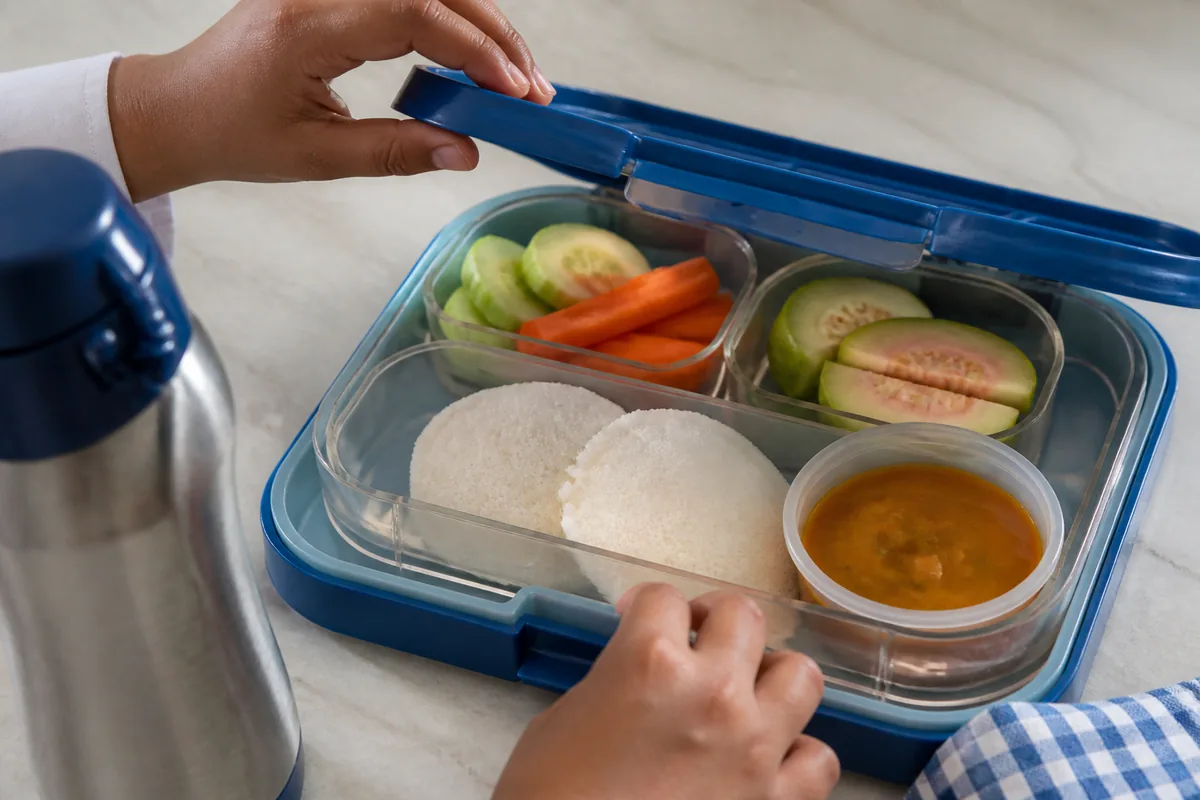
Quick takeaway: Rotate familiar Indian formats and change fillings. For selective eaters, pair one safe food with a small exposure rather than forcing a full unfamiliar meal.
How should food stay safe?
Keep hot food hot and cold food cold, minimise the time perishable food spends at room temperature and clean the box thoroughly every day. Bengaluru heat and long travel can make temperature control more important than a recipe’s nutritional profile.
Preheat an insulated container with hot water before adding steaming food, or use an ice pack beside chilled items such as curd. Follow the manufacturer’s instructions and the school’s storage arrangements. Discard food with unusual odour, leakage or uncertain temperature rather than asking the child to finish it later.
The FSSAI Eat Right materials and Eat Right School programme provide official Indian guidance on safe, nutritious food environments. Check school rules on nuts, eggs and sharing because allergy protection depends on consistent practice.
Teach handwashing and easy opening. A tightly sealed steel box may be hygienic but unusable if the child needs an adult each day. Practise opening it at home and label every part.
Quick takeaway: Temperature, hygiene and usable packaging are non-negotiable. A nutritious meal is valuable only when it remains safe and the child can manage it independently.
How can families reduce morning stress?
Reduce morning stress with a two-stage routine: decide the weekly lunch pattern before shopping, then prepare one component the night before. Keep two emergency combinations available for mornings when the plan changes.
Create flexible categories rather than a rigid menu: Monday roll, Tuesday rice, Wednesday idli or dosa, Thursday paratha, Friday child choice. Then select fillings from what the family already cooks. This reduces separate “school food” preparation.
Emergency options may include vegetable poha, a paneer or egg roll where allowed, idli from prepared batter, or fruit with roasted chana plus a simple staple. Pack portions in under ten minutes and note what returns.
School readiness includes managing belongings, eating and asking for help. Families with younger children can use our kindergarten readiness checklist to practise these routines without turning them into a test.
Quick takeaway: Plan formats, not elaborate recipes. One evening preparation step and two emergency options keep healthy lunches realistic on busy mornings. This keeps healthy lunch box ideas for school practical and sustainable for families.
What do parents ask most?
These answers help families apply healthy lunch box ideas for school to everyday routines. Adapt the guidance to your child’s age, health, school context and individual needs, and seek qualified support when safety or persistent difficulty is involved.
Capital International School supports families exploring healthy lunch box ideas for school through purposeful learning, wellbeing, physical development and clear family-school communication. For programme-specific guidance, speak with the school team.