
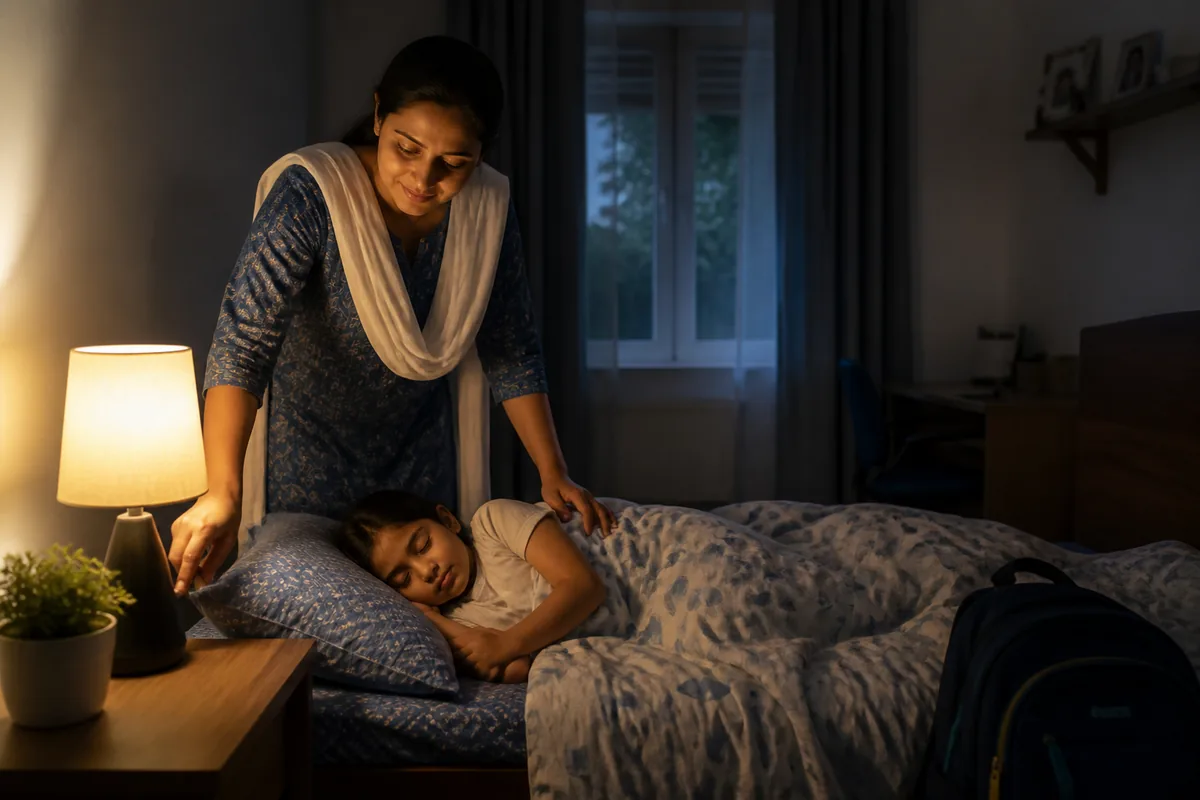
Sleep Schedule for School Children: Definitive Guide
A healthy sleep schedule for school children provides 9–12 hours for ages 6–12 and 8–10 hours for ages 13–18, with a consistent wake time and a calming routine. Count backward from the required morning wake time, allow time to fall asleep and adjust gradually. Weekend shifts should not make Monday feel like jet lag.
Sleep affects attention, mood, memory, physical recovery and safe travel. If a child is repeatedly tired at school despite enough time in bed, investigate sleep quality and health rather than simply moving bedtime earlier.
How does sleep schedule for school children work?
Recommended sleep for children is a range, not one exact bedtime. The CDC recommends 9–12 hours per 24 hours for ages 6–12 and 8–10 hours for ages 13–18. Individual need varies within those ranges.
Work backward from wake time. A ten-year-old who must wake at 6:30 a.m. and needs about ten hours should be asleep near 8:30 p.m., so the wind-down may need to begin around 8:00. Bedtime is the start of the routine; sleep time is when the child actually falls asleep.
A 2026 CDC National Center for Health Statistics brief reported that 85.6% of U.S. children aged 2–17 had a regular bedtime, while 8.1% were tired during the day on most or every day. The figures are not India-specific, but they show why both regularity and daytime function matter.
School schedules, travel and climate shape family routines, but biology still needs enough opportunity for sleep. Protect the required range before adding early coaching, late tuition or optional screen time.
Quick takeaway: Use age-based ranges and daytime functioning together. Count backward from wake time and distinguish time in bed from actual sleep. This supports sleep schedule for school children through repeatable, age-appropriate steps.
How can families set bedtime?
Set bedtime by anchoring the morning wake time, calculating the sleep window and moving the schedule in 15-minute steps every two or three nights. A sudden one-hour change often leads to lying awake and conflict.
What should the routine include?
A bedtime routine for kids can be 20–40 minutes: wash, prepare clothes and bag, dim lights, read or talk quietly, then lights out. Use the same order more than the same clock minute. Preparation also removes morning worries that can keep a child alert.
When should screens stop?
Create a device parking place outside the bedroom and end stimulating content before the wind-down. The exact interval may vary, but the rule should protect sleep and avoid arguments in bed. Our screen time guide explains purpose-based family limits and device-free routines.
How different can weekends be?
Keep wake time reasonably close to school days,often within about an hour is a practical family target,while allowing occasional events. If Sunday night regularly becomes difficult, bring weekend waking earlier in small steps and protect morning light and activity.

Quick takeaway: Anchor wake time, move gradually and repeat a calm sequence. Consistency matters more than creating a complicated sleep ritual.
Why is my child tired at school?
A child tired at school may have insufficient sleep opportunity, poor sleep quality, illness, medication effects, anxiety, a disrupted schedule or an overloaded day. Track bedtime, estimated sleep, waking, snoring and daytime symptoms for one to two weeks before assuming the cause.
Ask the teacher when tiredness appears. Sleepiness during the first lesson, after lunch and during difficult independent work can have different explanations. Also check whether the child wakes refreshed on non-school days and whether travel time creates an unusually early start.
Frequent loud snoring, gasping, pauses in breathing, morning headaches, restless legs or persistent daytime sleepiness should be discussed with a qualified paediatrician. Enough hours in bed do not rule out a sleep-quality problem.
Sleep and concentration are closely connected in daily functioning. Families noticing attention problems can use our guide to improving concentration in children once that scheduled post is live, while keeping medical assessment separate.

Quick takeaway: Persistent daytime tiredness requires a pattern check and sometimes medical assessment. Track sleep quality, timing and school context,not bedtime alone.
How can mornings protect sleep?
Morning routines protect sleep by reducing the pressure to wake earlier than necessary. Pack bags, set out uniforms and decide breakfast the previous evening; use light, water and calm movement after waking instead of repeated last-minute alarms.
Build backward from departure. If dressing, breakfast and final checks take 45 minutes, add a small buffer rather than waking the child for an unstructured extra hour. Keep essential items in consistent locations.
Avoid using late-night study to compensate for an overloaded plan. Students balancing training and learning can apply the weekly method in our academics and sports guide once published.
Capital International School encourages routines that support children’s readiness to learn. Families planning transport should include the real pickup time; our Bangalore school transport checklist helps parents assess routes and handovers.
Quick takeaway: Prepare the night before and calculate the real departure routine. A calm, efficient morning protects the sleep window. This keeps sleep schedule for school children practical and sustainable for families.
What do parents ask most?
These answers help families apply sleep schedule for school children to everyday routines. Adapt the guidance to your child’s age, health, school context and individual needs, and seek qualified support when safety or persistent difficulty is involved.
Capital International School supports families exploring sleep schedule for school children through purposeful learning, wellbeing, physical development and clear family-school communication. For programme-specific guidance, speak with the school team.